It is good sometimes to ask significant questions which point us to what we want to be and where we want to go as a country. Once that vision and goal are established we can seek to move towards it. But clarity of purpose is essential. In the American civil rights struggle in the fifties, a popular song carried the words, “Keep your Eyes on the Prize.”
So let’s put a few questions to ourselves. Firstly, what kind of country do we want? What building blocks are needed? I believe our answer would be that we want a country which is non-racial, democratic, with good justice systems in place, plus economic prosperity, national strength, unselfishness, and a concern for the poor and marginalised. I believe that sort of vision is really worth striving for.
Then we ask what kind of people do we want to be? I believe we want a country of good people. That kind of answer might seem naïve or simplistic, but the fact is that goodness is a basic building block for any country.
Alexis de Toqueville, the nineteenth century French philosopher, was asked the question after visiting the United States, “Wherein lies the greatness of America?” He replied, “I sought in the fertile fields and the boundless forests and in her rich mines and it was not there. I sought for the greatness and genius of America in her Democratic Congress and her matchless constitution, and it was not there, not until I went into the churches of America and heard her pulpits aflame with righteousness did I understand the secret and the genius and the power. America is great because America is good and if America ceases to be good, America will cease to be great.” Whether America is still good and still great could be debated, but the principle is still valid, and the Bible affirms it. Says Proverbs 13:24, “Righteousness exalts a nation.” A righteous nation will go up and the corollary is also true that an unrighteous nation will go downhill.
The late Oginga Odinga, the Kenyan politician, said at the end of his life, “We wasted 30 years of independence. We did everything, but we forgot virtue.” For example, if South Africa was full of Thuli Madonsela’s we would be a great nation. I believe that is self-evident.
Another key question. What kind of Constitution and laws do we want? I believe we want the Constitution and laws which acknowledge a transcendent accountability and basis. One modern political thinker in the States has said, “Why have law and order deteriorated so rapidly in the United States? Simply because for many years it has been commonly taught that life is a random, accidental phenomenon with no meaning except the purely materialistic one. Laws are merely a matter of human expediency since humans are allegedly accidents, so are their laws.”
Theodore Roosevelt once said, “Power undirected by high purpose spells calamity. And high purpose by itself is utterly useless if the power to put it into effect is lacking.” The late and great Edgar Brooks, parliamentarian, academic and historian, observed even more pointedly, “Democracy
is not a heresy but democracy divorced from God, freedom and immortality, and from every moral imperative, is certainly a heresy, and certainly a dangerous one.”
Now we ask what type of government do we want? For the State to function for the good of all, what type of government does God require? In the light of what I said above, He first of all wants a government of righteous character and moral integrity. A good government will also protect the underprivileged, the powerless and foreigners. A godly government will also understand that it is not autonomous but is God’s servant for the good of all (Romans 13:3). A good government will also recognise that the centre point of its conscience is the Church of Christ in the country. A good government will likewise protect the impartiality of its courts and justice system and be committed to a free press and freedom of speech. It will encourage those who are law abiding, punish wrong doers, and collect taxes for State administration.
We also need to ask what kind of morality we want. A strong and good country will not embrace the postmodern notion of ethical and intellectual relativism. Rather will it hold to the notion that some things are right, and some things are wrong and some things are true and some things are false. Perhaps the final and very key question is this: “What kind of families and parenting do we want?” The family is the basic building block of any society. If the family crumbles, the nation will crumble. Young people need to be taught that sex is for marriage and marriage requires the lifelong commitment of the two partners. Easy divorce should not be encouraged. And children should be raised in the nurture and discipline of the Lord and with two loving and caring parents.
All of this adds up, I believe, to the national prize we covet. And we must, “Keep our Eyes on the Prize!”
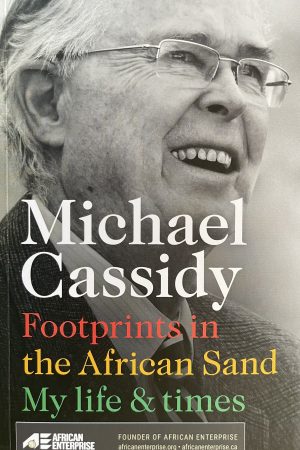
Article provided by AE Founder Michael Cassidy, for Gateway, May 2017.
Here’s a snapshot of what the AE Malawi Team have been up to since January 2017.
January was a month for new beginnings. The office reopened on the 9thJanuary, and began the year with 21 days of prayer and fasting to dedicate the year to the Lord.
In February, it was time to start recruiting for missions, as well as beginning social action projects for 2017. 6 new Foxfires were trained in theology to be better equipped in Gospel proclamation to the youth of Malawi throughout 2017. 22 women were recruited for the tailoring programme at Lilongwe, and commenced their training with forming friendships, undergoing counselling, and basic sewing skills like marking cloth, cutting and stitching.

2017 Malawi Foxfires in action.
March was a month full of meetings and engagements, as the Foxfires team undertook their first outreach event. The Global Evangelists Forum brought together over 70 leaders from a number of organisations for a 4 day conference in late March, and the Malawi Team reached out to a number of churches. These partnerships brought 500 back to the Lord!
Easter in April gave the Team a chance to run Easter Revival Meetings from 14-16 April. There was also a Pastor’s Theological Training course run towards the end of April to prepare 40 pastors for the Lusaka Leadership Initiative late in the year (September).
AE Malawi is looking ahead to a busy next three months, with the Foxfires Team and Women’s Tailoring Project set to continue, and further preparation for the Lusaka (Zambia) city wide mission in September.
Your support leads to inspiring testimonies from women like Brenda, a 19 year old single mother, who was leading the life of a drunkard before coming to Christ, and joining the sewing project at Lilongwe.
“Before I came to the AE program, I was doing nothing as a means of living, apart from household chores to help my mother. I joined this centre with the aim of gaining sewing skills to be independent, like the friend who informed me about this school.
I have learnt so many skills which are benefits to my life. These include how to pray on my own and also how to better understand the Gospel. I have learnt how to cut a cloth and make a dress.”
Thank you for supporting missions and social action projects in Malawi through AE.
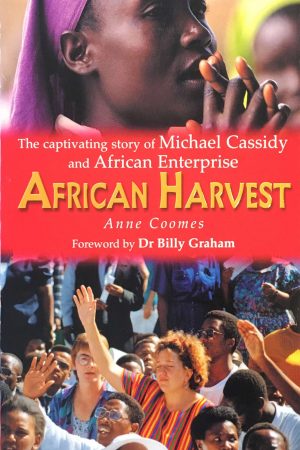
Michael Cassidy Founded AE in 1962 with a vision:
“To evangelise the cities of Africa through word and deed in partnership with the Church”.
Michael is now over eighty years old. But the legacy that he has established continues. The Gospel continues to transform hearts across the African continent. Through God’s provision, AE has been at the forefront of peace, reconciliation, ministry and social action during periods of political instability, devastating natural disasters and extreme violence. AE now has offices in 10 countries, and works in even more, to bring people to Jesus – Africa’s greatest need.
With your prayers and partnership, African Enterprise is investing in the nations of Africa for eternity.
Thank you, for joining with us in this exciting work of spreading the message of hope in Christ through Gospel proclamation and discipleship.
Watch the video below to to hear Michael’s message.
The Chatham’s (Bill and Judy) call themselves “normal, everyday supporters of AE”. What a humbling description. But what does that look like?
Bill and Judy are a part of our Queensland AE family after moving north from Victoria in 2005. They attend Paradise Point Uniting Church. Their love for AE stems from their love of Christ and his word. Bill says,
“AE works in Africa in word and in deed. We believe faith is dead without actions. So, we support the way AE goes about bringing the Gospel to Africa, and at the same time engaging in deeds that help Africans in a practical way. Christ’s own teaching was attended by His actions.
We live in a good country. People in Africa have families and the same needs as we do – if regular help can be directed their way we feel we should be involved.”
They admire the way AE trains pastors, trains women in tailoring and reaches out to young people through other young people (like the Foxfires). They find the combination of practical love and mission work captivating, which is why they have been supporting AE for over 30 years!
In the late 1970s Bill and Judy first encountered AE, when they attended a talk in Kew (Vic) by an AE representative from Africa. Impressed by the good progress of AE in reaching out to the nations of Africa with the Gospel, and through aid and development projects, for example to improving sanitation, increasing food security and combatting poverty, they decided to join the AE family.
Bill finds particularly impressive the explosive nature of evangelism in Africa. He recalls meeting Michael Cassidy years after first hearing about AE.
“My meeting with Michael and reading his books gave me a much deeper insight into how God called Michael to bring His Word to Africa. How impressive it is to see over 50 years, how Michael’s original call, to evangelise Africa, has spread the Gospel out over vast areas of Africa and is expanding year by year.”
A move to the Gold Coast to join family in 2005 led to increased involvement with AE. Bill and Judy support AE through regular donations, prayer, and sharing AE with their church and friends. We are so thankful for their love for the people of Africa!
Through the Chatham’s, Paradise Point Uniting is a partner in the work of the Gospel through AE. Bill arranged for AE to be included among the Church’s mission partners, and encouraged other church goers to give toward AE’s dynamic Gospel pursuits. Bill and Judy value face to face interaction with AE Australia staff, and with African evangelists, who come to speak of the harvest going on throughout Africa’s many nations. They desire to see more Australian churches catch the vision for evangelising the cities of Africa.
We are thankful to God for this faithful and Gospel driven family!
A new report by the Washington-based World Bank shows a marked decrease in extreme poverty around the world over the past few years.
But there are still an estimated 767 million people globally living in shocking conditions, half of them in sub-Saharan Africa.
In this region alone close to 390 million people are trying to exist on an average $US1.90 a day.
The report says over 60% of Africa’s urban population lives in areas with some combination of overcrowding, low-quality housing and inadequate access to clean water and sanitation.
Nearly two-thirds of these people are packed into slums – double the number living in slum conditions in other parts of the world.
The problem lies in part with a massive lack of infrastructure.
In Nigeria, for instance, only Lagos and Abuja have sewerage systems, and most households in the two cities are not even connected. In Ethiopia, only Addis Ababa has a sewerage system, serving only 10% of the population.
In 2012, less than half of Addis Ababa’s residents had access to safe water.
A similar situation exists with waste collection. The report says that across the whole of sub-Saharan Africa, only 45-82% of locally-generated waste in urban areas is collected.
World Bank data dealing with housing and basic services like electricity paints an equally grim picture.
Only 16% of urban households across Africa have permanent roofs. Even houses with roofs may not have proper walls or floors. Only 70% of homes have electricity in urban areas and barely 2% in rural areas.
The World Bank says that poverty is becoming increasingly concentrated in sub-Saharan Africa and it calls on countries to pursue broad-based economic growth, to invest in people, and to insure the poor against ever-changing risks.
Story provided by Mike Heard for AE Australia
Gum Thany grew up believing that aggression and high living were essential qualities for those seeking to become leaders in his country.
“I was greatly influenced by both grassroots and national attitudes that a leader had to be rough, tough, treat citizens as his servants and live an extravagant lifestyle”, the South Sudanese man says.
An encounter with African Enterprise (AE) brought a radical change in his understanding.
Gum, who at the time was secretary-general of the student union at South Sudan’s Juba University, was selected to take part in an AE Peace Building, Reconciliation and Leadership training program, and immediately found his views about leadership being challenged in many ways.
“I have learned that a leader is supposed to be a servant leader and not expect to be served”, he says.
“I have also learned a great deal about the need to shun tribalism and build bridges with other young leaders across ethnic backgrounds.
“And I have learned the importance of ethical and Godly values as essential pillars for any leader who wants to make a difference within their sphere of influence”.
Gum says he’s going to use the knowledge and skills he has acquired through AE to help solve conflicts which might arise at university, and he will encourage others to seek the life-changing understanding which the peace and reconciliation process brings.

Thank you for supporting AE reconciliation projects.
If you would like to donate to other AE initiatives, click here.
Story provided by Mike Heard, AE Supporter.